
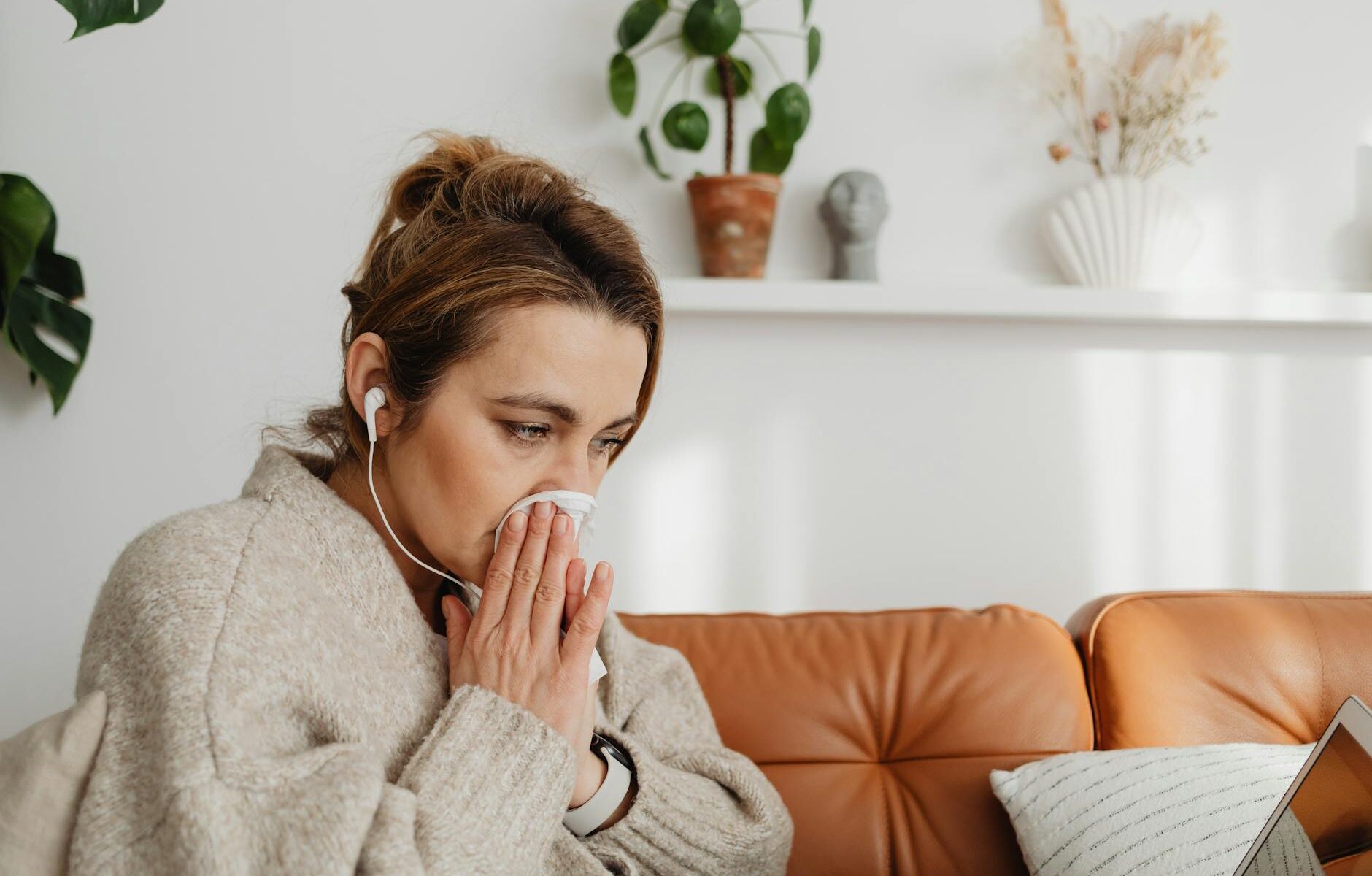
How to deal with autumn and winter colds and flu?
The clocks have gone back, the children are back at school or college, groups and activities tend to move indoors, and we catch the inevitable autumn cold. Colds are caused by bacteria and viruses, and we might expect a couple of illnesses a year. This causes us to lose days at work, and for people who work from home or work for themselves, the temptation is to carry on working. We all like to soldier-on even when we are feeling dreadful, so called “presenteeism”. This does us no good at all.
What can we do to reduce the risk of colds, or to help ourselves if we do catch something? Here are some ideas.
Reduce the risk of getting a cold by reducing crowd contact
Minimise your exposure – this is tricky if you’ve other household members in school or college, or you go into work in a busy office. Public transport and flights are hazardous, and as most people don’t care to mask-up these days, what else can you do? I try and stand away from congested areas. Make sure if you are taking a flight that you’ve got a good night’s sleep and have a healthy diet to keep your immune system strong (see later in article). There are some research studies where people put Vaseline around their nostrils which reduced infections, but as people don’t tend to do this much, I don’t know how tried and tested it is.

Get a good night’s sleep
I think we all know if we get a poor night’s sleep, we often feel sniffly or run-down the next day. There’s good reason for this. Here’s an interesting study that showed that out of 153 healthy men and women, those who had a good night’s sleep of more than 8 hours a night over a two week period were less likely to develop colds. The people were given a cold virus nasally. Sleep deprivation is known to reduce our immune response to infection, so getting a good kip is one thing we can aim for if we are traveling or have an important event coming up, and also to build up our resistance as winter nears.
Have you switched the heating on?
Radiators and heaters that have been quiet for six months may fill your room air with dust and irritate your nose. Heating also dries and dehumidifies the air. (If you have a piano you will know to keep dishes of water inside of it!) Where I work I find the electric storage heaters dry my nose and throat and give me a slight headache. Make sure you stay dehydrated, and keep plants in your room or dishes of water if you really feel the air is dry.
Have you reached for the carbs, and dropped the veggies?
Come the Autumn, we reach for the carbs!! Perhaps as we can’t access so much fresh fruit and veggies as we might over the summer, we more naturally switch to stews, pasta, rice and nice warming and comforting dishes.
Carbs are our body’s response to boosting our mood – a nice bit of chocolate or some dumplings in our stew can give us a shot of dopamine. Temperature-wise, carbs create energy and heat is produced in our cells to warm us up. So for me personally I know winter is a time where I’ll put on a few pounds. So this is fine, but I’m also aware I may have dropped my veggie intake and reduced my valuable intake of vitamins, minerals and polyphenols. What’s a polyphenol? These are the colourful compounds in fruits, vegetables and flowers, and I say to people to eat or drink a rainbow of colour every day. They are important for our health, and along with many vitamins, are needed by the immune system to function well.
Depending whether you have two or three meals per day, reach for the rainbow for one of them. For breakfast, have fruits like blueberries or red and black grapes, for your reds, purples and blues. Or for lunch, crunch your way through a salad with carrot and peppers, and I include raw cauliflower and broccoli in mine for your oranges, yellows and greens.
Summary
Try and reduce your exposure to germs if out and about
Get good sleep
Check if your heating is drying your room air
Check your diet – can you increase your fruit and veg intake?