
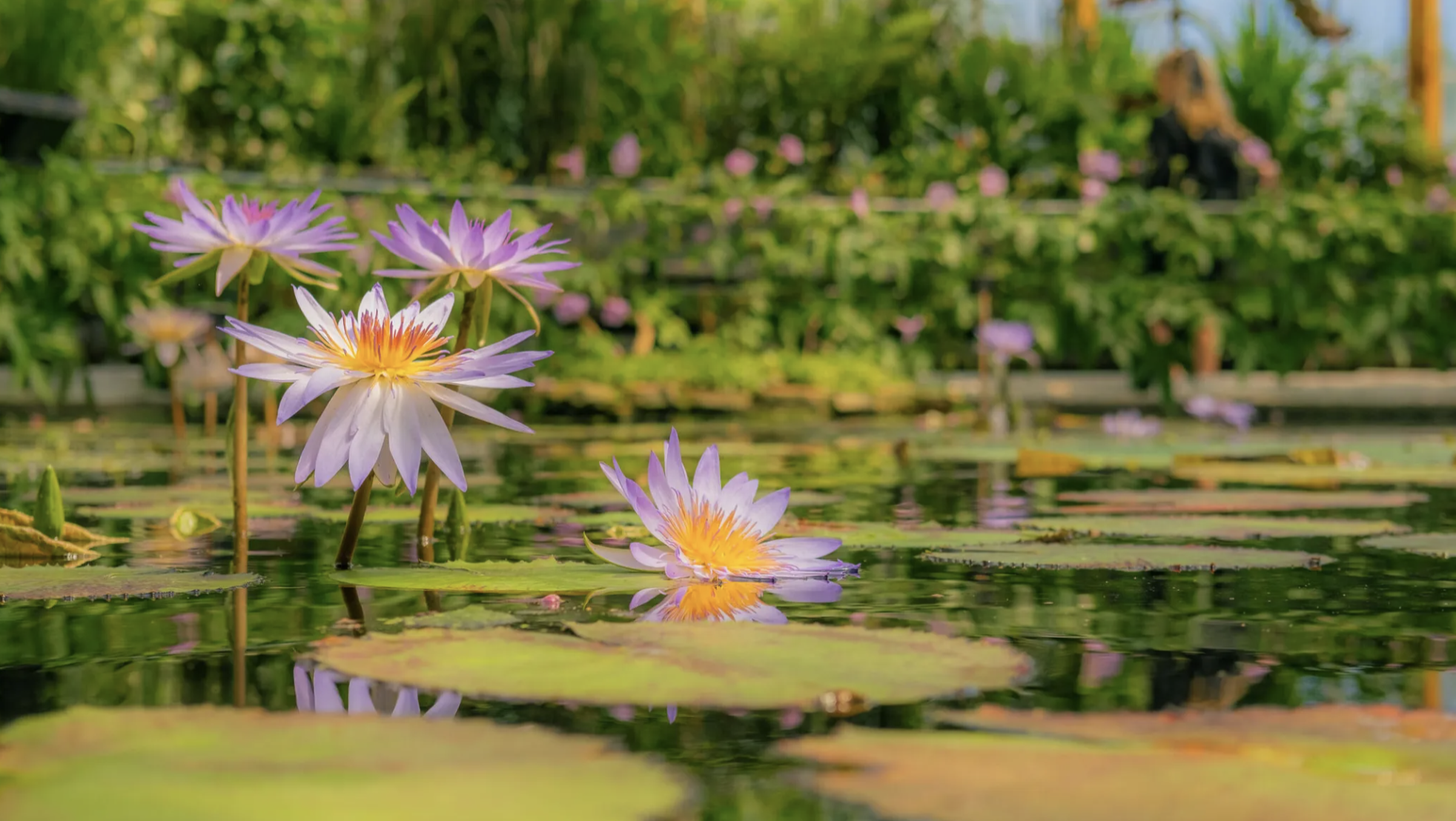
We need no excuse to get outdoors at this time of the year. We all know how nature heals by bathing us in green viridescence created by sun shining through new leaves. We might have read that the lovely aromas of pine forests are also good for us. So it is nice to understand more about this through fascinating research on the power of plants and how they can benefit our health and wellbeing.
One study at the Oxford Botanical Gardens led by Tucker in 2026 enrolled participants to experience a plant-free room compared to five of their amazing glasshouses. These were the Arid, Carnivorous Plant, Conservatory, Cloud Forest and Waterlily glasshouses. All the spaces were heated and were similar humidity.
Participants spent thirty minutes in each space and had psychological and physiological tests to measure their mental wellbeing – particularly anxiety, negative emotions, heart rate and their parasympathetic (rest and digest) response.
The researchers measured all the scents released in the space (the volatile compounds) to charatcerise the different aromas, and looked at the greenness of the foliage in the spaces. They also measured man-made pollutants including benzene, toluene, ethylbenzene, and xylene.
What was in the air?
All of the glasshouses contained higher levels of plant volatiles – the Waterlily House was the richest with many different compounds, and the Arid house contained the least numbers of volatile compounds. The plant-free room contained the highest proportion of man-made polluting compounds which were mainly xylene isomers. I’m presuming the Glasshouses are similar construction so this already shows the power of plants to filter air and remove polluting substances.
What happened to wellbeing?
The participants all reported lower levels of anxiety and fewer negative thoughts when sitting in the plant glasshouses for thirty minutes. They saw no change by sitting in the plant-free space. The Waterlily House was the most favoured but we can’t tell whether this was just due to the flowery volatile compounds or the foliage or even something more spiritual in this space.
There were no observed changes in heart rate or parasympathetic response, and it could be that a larger group of people would be needed for a better study.
Did the foliage matter?
The researchers measured the amount of foliage by taking photographs, and more foliage was associated with reduced anxiety scores, but this was not a significant change. It is very likely that it is both the scentscape and foliage that accounts for the positive feelings experienced.
Plants are amazing!
I don’t think we needed a study to tell us how important it is for our health to be in nature. But this work is important to inform policy and also funding of our precious botanical spaces. Spending just 30 minutes in a glasshouse improved how people felt. The Waterlily glasshouse seemed to evoke the strongest changes and also contained the highest and richest abundance of volatile compounds in the air.
Tips for Going Green!
- Our scentscapes are clearly important to us. How can we recreate something in our homes? Scented geraniums offer us a bright green hues that can brighten up a windowsill and release glorious aromas when we brush past the leaves.
- Anyone feeling a little low could spend thirty minutes in nature – I would recommend being well-wrapped up and warm to also help you relax.
- The study also shows how man-made chemicals are higher in some environments that do not contain plants, and these spaces did not reduce anxiety at all. So bring plants into your home if you can.
- Go and visit your local botanical garden for a wonderful experience anyway, and it will also to help your wellbeing.
Reference:
Tucker MR, Kay W, Storer K, Lindström Battle A, Willis K. Smelling Wellness: Associations Between Botanic Garden Scentscapes and Human Health Gains. Int J Environ Res Public Health. 2026 Feb 28;23(3):304. doi: 10.3390/ijerph23030304.