
Over the summer I have felt my tummy bulge and I’m experiencing dizzy spells for the first time ever. Might that be the heat or should I understand my body a bit more? For years I’ve been intrigued in the ketogenic diet, and some of the people I work with are Doctors and talk about its medical use. I’m wary of us doing anything dramatic on our own with out medical help, so thought I’d explore it more gently for myself.
Fasting, Fasting mimicking diets (FMD), “going keto”, “low carb”
These ways of modifying our food intake are are all over the internet. They are being researched for their health benefits which gives me reassurance. This article has some simple thoughts from me, and I’m coming from the perspective of mid-life people developing a bit of a belly, and not if you are pre-diabetic or have a known medical condition.
What is fasting?
Fasting gives your body a rest between meals. It helps us away from our snacking culture (which the retailers want you to have, as snacks are big business ££). Can you eat an earlier evening meal and go through to breakfast – brilliant, that’s a 12 hour fast. Can you eat early evening and go to lunch, then that’s a 16 hour fast. People do fast for longer and days at a time, but I would not attempt anything without medical help, and it’s the sort of support we wouldn’t get in our rushed NHS service. So do a tiny step first.
Reduce your snacks or swap sweets or chocolate for nuts, fruit, carrot sticks.
Try and fast overnight for up to 16 hours.
Keep this going for 3-5 days to get into the habit of a more healthy eating pattern.
Fasting-mimicking diets
These are quite expensive food kits that again are used in medicine for a quick and reliable response for some patients, and they provide all the nutrients you need and food you need to fast for 5 days. They are expensive so I’ve not tried them, but my work colleagues have and experienced headaches and felt lethargic. Not for me.
Low carb
Low carb is advocated by the Low Carb GP Dr David Unwin and I’m a huge fan of how this simple approach helps people who are pre-diabetic or have Type 2 Diabetes. Again, helpful under careful medical supervision, but you can introduce the principles if you are me – mid-life and paunchy! Keep a food diary to be honest about your sugar intake, fizzy drinks, that odd bit of cake here and there. Cut it out! Do not eat white starchy food like potato, pasta and rice. These are scrummy, comforting and filling, but they rapidly turn into glucose so its like taking a huge sugar injection. Eat brown rice, brown pasta, and by focusing your meals around the protein with veggies, you will not go hungry. I eat lower carbs most of the time, and will eat half the carbs compared to others, or if eating out, sometimes none at all.

My favourite – mash potato. Now for special occasions not every day.
Monitor your sugar intake by keeping a food diary.
Watch the white pasta, rice or potato – switch to brown.
Ensure you eat wholesome protein and veggies to fill up.
Ketogenic diet
There’s the idea that in prehistoric times we wouldn’t have eaten carbs as we did not cultivate wheat and potatoes. I’m not so sure – plenty of wild plants have starchy roots which we may have eaten. That’s one of the justifications behind the keto diet. Another is that like going low carb, it reduces the sugar and carbs we take in. The idea is to minimise carbs to 20 g a day (a slice of bread, half a baked potato), and to focus our meals around protein, fat, and non-starchy vegetables. Fruit contains sugar so we need to be careful. So it is a bit more of a radical change than just low carb.
What’s happening in our body? In our cells the chemistry is switching from using glucose to create energy to using the protein and fat to create ketones. Our cells use many different types of fuels not just glucose which we are probably most familiar with from learning about respiration in GCSE biology. Ketones, short-chain fatty acids from the gut bacteria, and even compounds from alcohol are all fuels that our cells can use. Ketones are interesting because they help us recover from relying on glucose for fuel, and the critical part, is they steer us away from pumping out insulin all of the time. So this is great for me as my belly is a sign I’m moving into the poor metabolic health zone. Belly fat suggests there’s fat around my abdominal organs, and it can be a sign that poor metabolic health is coming. So I want to stop that now.
How can you achieve a ketogenic diet where you “go keto” and produce ketones in the body? I’m guided by Dr Annette Bosworth, a medic in the US. Here’s a link to a podcast she did that I think is a good listen. (Do be wary of these longer-style podcasts as I feel people can overshare more faddy and radical ideas that would not be backed by science). She pushes her patients though quite a strict programme and I wouldn’t do this unsupervised. I’ve gone for a gentler approach.
No sugary snacks – they’ve gone
Low carbs each day, and darn, zero beers contain carbs.
High protein each meal
High fat
Plenty of green veggies.
I’m not religiously avoiding fruit and veggies as what I dislike about the keto is it can be low fiber which is not healthy. I fast until lunch and then go for tins of fish, nuts for snacks, cheese and eggs or a little meat for evening meals. I’ve upped my fat intake which again is contrary to what we’ve been told. I go for a bit more butter and olive oil on salads, but I’m not eating high amounts of fat advocated by the keto diet. I might introduce more in the weeks to come.
I have used an online tool to understand what carbs are in different foods. The Chronometer App is free, and after you’ve plugged in your meals for a few days, you get a good idea of what’s in the food you are eating. I was surprised that zero (alcohol-free) beers still contained carbs and 3 pints took me over my recommended 20 g of carbs a day.
The results? I’ve maintained this for 2 weeks. Gone from 10 stone to reaching 9 stone 9 on the scales at one point. I’m not doing urine ketone tests every day, but today was pink showing low to medium levels of ketones in my body. (The strips were £10 off Amazon for 150). I must say I feel great – sleeping well and am full of energy. I can be on the computer concentrating all day and have no brain fog. I feel happy. But to be honest, I probably was before. I’d be interested if this helps over winter where my mood does drop. I’m going to stick it out and hopefully this will be how I eat from now because it is just delicious healthy food. It feels so good to not have the sugar all the time.
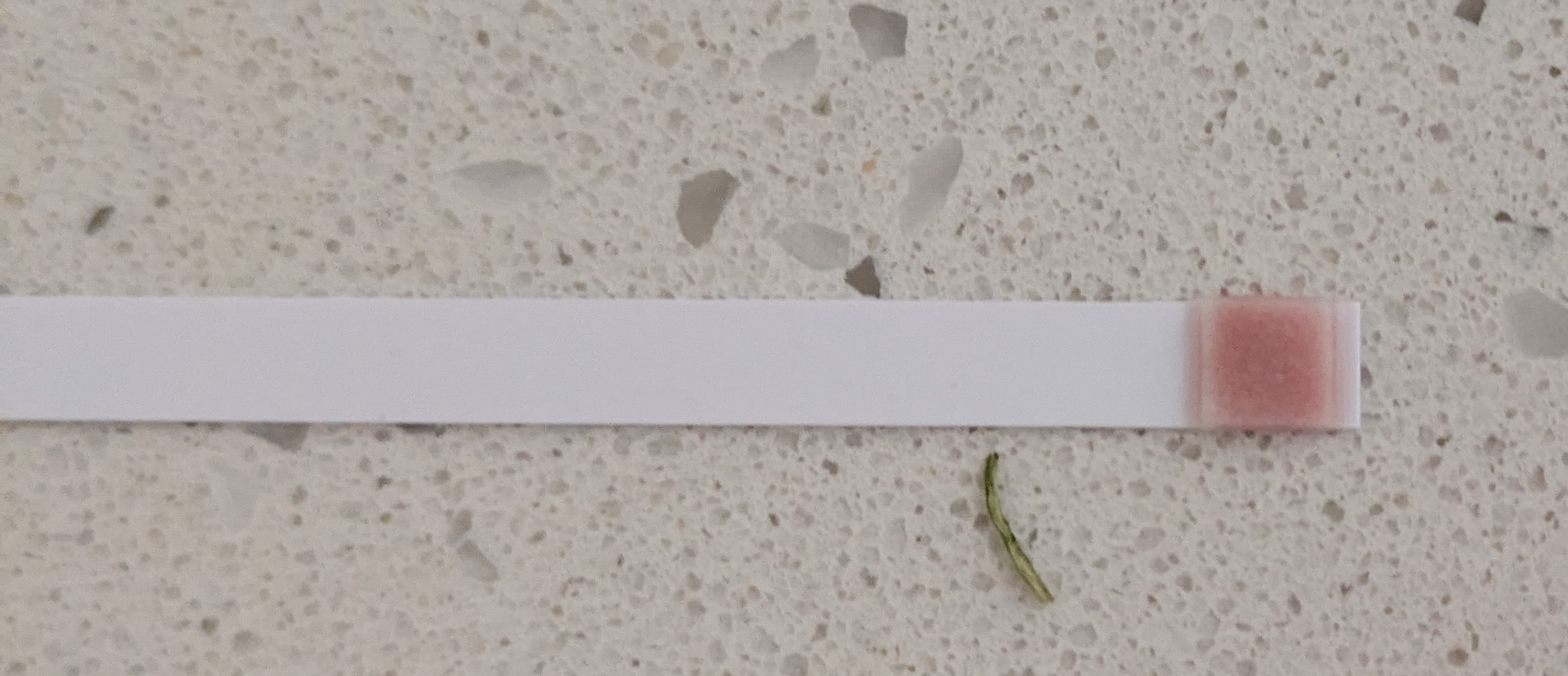
Here’s the ketone strip – its very easy to do. Dip into your wee and watch the colour change. Here’s a darkish pink showing ketones there – yey.
What if you want to try one of these approaches?
I think you can explore any of these ideas gently by yourself. Don’t spend lots of money on measuring devices and gizmos. The diet packs are pricy but perhaps that’s the right choice for you. Follow the links I’ve suggested and do some reading. If you are living with an illness or know you are pre-diabetic, find a nutritionist to help you, or an integrative medicine doctor who might have a practice local to you. You’ll have to pay for this though.
These are all just sensible and healthy ways of living, or you can dip in and out for a few weeks at a time. The great news is, there is research helping us understand what is going on in the body, and some health professionals deciding to share their knowledge to help us.
What is one thing you have learned?
What one thing might you change today whilst you read more?
Summary
- Fasting, Low Carb and Keto are different eating patterns that research suggests can help us live more healthier. People report better concentration, better sleep, better mood and weight loss.
- They are sometimes used under medical supervision to help with conditions like Type 1 Diabetes.
- Fasting helps us think about our eating patterns and our snacking habits.
- Low carb and keto rely on reducing the sugars and starches in our diet in order to reduce glucose (which drives high insulin levels and dominates as the main fuel in cells).
- Planning your meals around protein and eating healthy fats is a good starting point to ease you into making changes to your diet that you can sustain.