
My 3-year herbal research stats…
Health expert & coach

I played ‘follow the leader’ a long time ago as I suspect we all did. Since then I’ve given the followers not a single thought, so I very much enjoyed a recent session in my Leadership module (Edinburgh Napier online MBA) where they were discussed.
What we are talking about here are followers in the context of leadership, and how they both interact in what is termed ‘leader-member exchange’ theory (LMX). This idea was developed in the 1970’s and a more detailed overview of its history and application can be found here in a paper by Green and Uhl-Bien (1995).
So we spend a lot of time thinking about leadership, and we may spend less time thinking about the perspective of those in our teams and their relationship with us. The LMX theory helps us understand these dynamics, and also why we might act in certain ways with our own leaders. We’ve all experienced rebels in the team, formation of a clique (‘in-group’) who have a close relationship with the leader, and I’m sure we’ve all experienced being more marginalised (‘out-group’). These are all explained by the theory.
I think what is interesting is the groups perceptions of each other, and I’m sure these resonate with us; in one study the in-group perceived the outs as “incompetent, silent and introvert” whereas the outs viewed the ins as “responsible, competent and hardworking” (Singh and Rukta 2018). So in any of our roles as team members or leaders, it could be useful to reflect on the dynamics and relationships that are playing out, and how we can go about working more effectively.
From my brief delve into this, many of the solutions boil down to increasing openness and trust within a group, sharing challenges and responsibilities, and setting a more level playing field generally. I think you naturally see more of this in work places today where structures are less hierarchical and teams might be organised around projects rather than departments, and with the dispersal of the strong power dynamics that are built-into hierarchies naturally gives rise to more open and sharing cultures.
It reminds me a little of open education practices, and that learning was richer when the power relationship (teacher-learner) was taken away and both groups co-produced the teaching learning experience. I think that’s where the magic really happened. The same is desirable in leading others where you’d hope that opportunities are equally delegated, people’s voices are equally heard (please pay attention to your introverts), and team members feel empowered to lead.
One limitation of the theory and its derivatives is it focuses on the face-to-face, and rather like online learning, it is assumed that everything merrily transfers to remote or digital working. Extra sets of guidelines, contracts between teams (whether they are working on business projects or are learning together), and taking time to build relationships are all an important start.
Good leaders need to guide and shine the light on the path ahead, but they should also understand the dynamics between themselves and their teams, to fully allow each and every one to do their awesome stuff. We should be less obsessed with leadership and focus on what makes for happy, fruitful relationships.
Keywords to look up:
LMX theory (leader-member exchange)
TMX theory (team-member exchange)
Followers
References:
Graen, G. B., & Uhl-Bien, M. (1995). Relationship-based approach to leadership: Development of leader-member exchange (LMX) theory of leadership over 25 years: Applying a multi-level multi-domain perspective. The Leadership Quarterly, 6(2), 219–247.
Singh, J., & Rukta, N. (2018). Attitude of In and Out-Group Employees and Leader Member Exchange. International Journal of Engineering Technology Science and Research, 5(3), 441–445.
Having a fantastic time on my MBA with Edinburgh Napier, and this week we’ve been discussing authentic and sustainable leadership. I got to thinking how within organisations, sustainability is more often applied to supply chains, but I could find little about how we can develop our research departments, or R&D more generally in a sustainable manner.
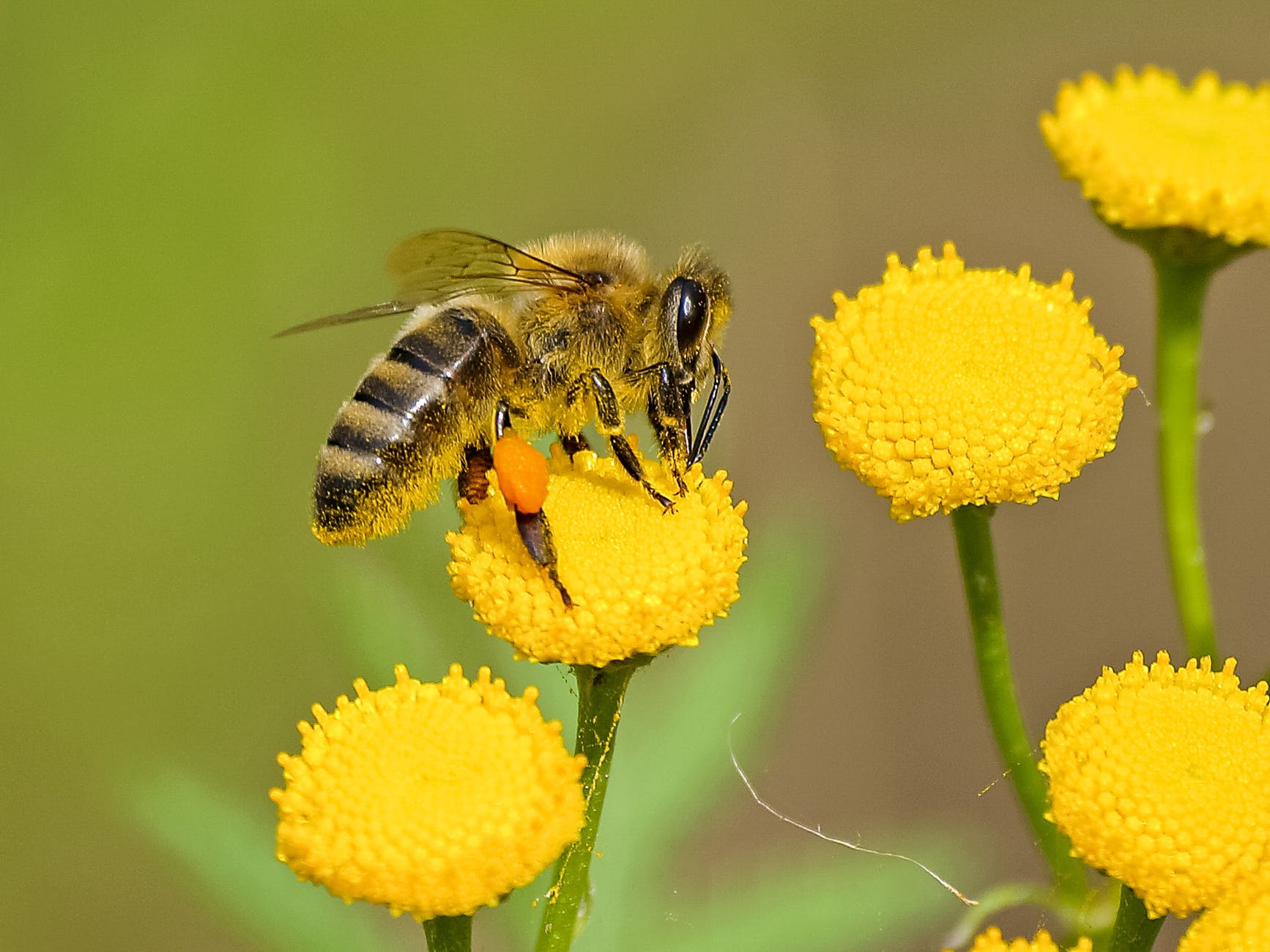
I found this paper by Gayle Avery and Harald Bergsteiner a useful start. It talks about different modes of sustainable leadership – the Honeybee or the Locust. The Honeybee representing practices that are more collegiate and open, and the Locust perhaps more traditional and hierarchical. I think this can be applied to R&D as a starting point to consider elements and practices that are sustainable – or not – within organisations.
Why is this important to me?
| FOUNDATION GOALS | MY APPROACH | REFLECTION |
| Studentship recruitment | Proactive in recruiting women scientists and from diverse student bodies (Inclusive language in adverts, sharing to diverse groups) | I feel this is being achieved with students from around the globe, and from diverse background. I could always do more |
| Partnership development | Proactive in seeking diverse organisations (e.g. not from top university Mission groups); proactive in working globally where possible | Achievable for many projects, but not where specialist knowledge or techniques are required. For commissioning labs, it isn’t always easy to gain the information to make this judgment. Ease of shipping of herbs/products for testing also a determining factor |
| Developing students | All students are supported to speak at conferences and publish (will cover registration fees, publishing fees if required); introducing science communications training in 2021 | This has been a great success and enables students to participate where they would not have university support. As we grow, I’ll probably need to set some parameters |
| Valuing students and partnerships | Valuing the partnership and the people; supporting them where possible with wellbeing goodies and giving access to our online learning | |
| Long-term perspective | We are transparent about our mission and longer-term goals, and that our relationships aren’t just about commissioning research | This is paying dividends with relationships now deepening with some partners |
| Sharing our company vision | All students/partners are introduced to Pukka’s philosophy and foundations; students company inductions | Scope for deeper discussions how some of these elements can be embedded more within university research teams; quite a superficial stance for now |
But this isn’t quite what I’m looking for
There are also higher-level goals that are useful, particularly when reflecting on my approach to knowledge exchange and openness:
| Knowledge sharing | From Day 1 our Pukka Research adopted Open Science approaches to be transparent and encourage knowledge sharing and accessibility | Probably one of our strengths given my background in Open Education; interesting that society and science bodies now all call for this; we publish under open licenses where possible and share all our data and workings openly for our own research; we need to bring partners on board! |
But what I’m looking for now, is more of a technical framework to help me think about:
Use of plastic materials in laboratories #PlasticFree
Resources and consumables
Waste disposal
More sustainable methods such as in silico modelling (computer modelling, big data)
WATCH THIS SPACE FOR MORE AND I LEARN MORE!